
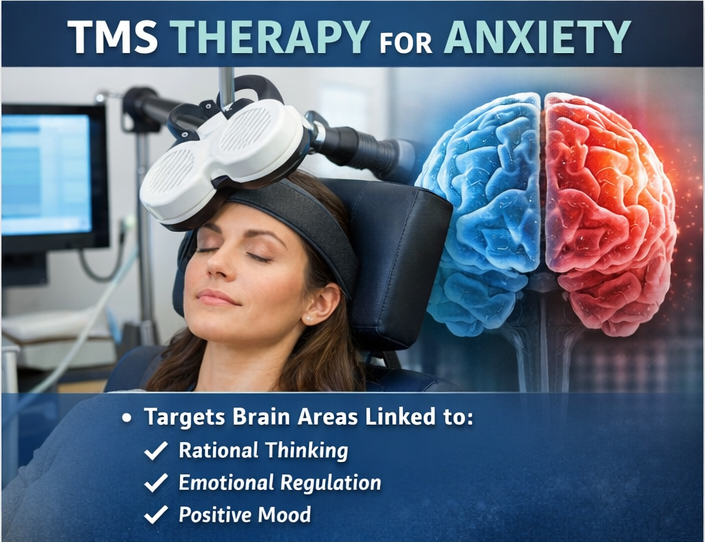
Transcranial Magnetic Stimulation (TMS) is an evidence-based, non-invasive treatment that has been extensively studied for depression and is increasingly being explored for certain anxiety conditions. While it is not currently considered a first-line treatment for anxiety, growing clinical research and real-world experience suggest that TMS may be beneficial for some people when anxiety symptoms are persistent or treatment-resistant.
How TMS May Help With Anxiety
TMS works by delivering targeted magnetic pulses to specific areas of the brain involved in mood regulation, emotional processing, and cognitive control. Many anxiety disorders are associated with imbalanced activity in brain networks, particularly those involved in threat perception, worry, and emotional regulation.
Clinical studies indicate that stimulating areas linked to rational thinking, emotional regulation, and positive affect may help reduce excessive anxious responses. Rather than “switching off” anxiety, TMS aims to support healthier brain activity patterns, allowing the brain to regulate stress and worry more effectively over time.
What the Research Says
Current evidence suggests that TMS:
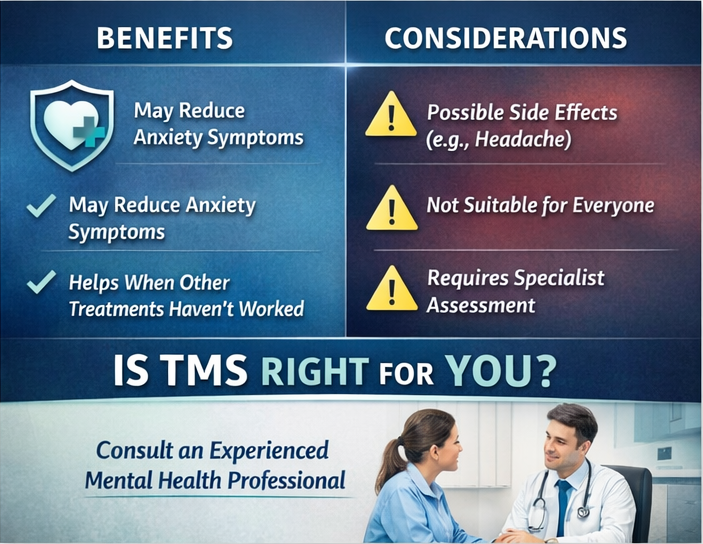
- May reduce anxiety symptoms in some individuals, particularly when anxiety co-occurs with depression
- Can be helpful for people who have not responded adequately to medication or psychological therapy
- Is generally well tolerated when delivered by trained clinicians following established safety protocols
However, it is important to note that results vary between individuals, and TMS is not a guaranteed solution. Ongoing research continues to refine protocols specifically for anxiety disorders.
Safety and Suitability
TMS is considered non-invasive, meaning it does not involve surgery or sedation. That said, it is a medical treatment and:
- May have side effects such as scalp discomfort or headaches
- Has specific contraindications, including certain neurological conditions or implanted medical devices
- Requires a comprehensive psychiatric assessment before commencing
For these reasons, TMS is usually considered after standard treatments, such as therapy and medication, have been explored.
A Personalised Approach Matters
Anxiety is complex, and no single treatment suits everyone. At reputable TMS clinics, treatment decisions are made collaboratively, based on clinical evidence, individual history, and patient goals.
If you are considering TMS for anxiety, the most important step is a professional assessment with an experienced mental health clinician who can determine whether TMS is appropriate for your specific situation and discuss realistic expectations.
This information is educational only and does not replace personalised medical advice.